

Not every part calls for the cost and commitment of a high-volume mold. When you need a custom plastic component in smaller quantities, thermoforming is excellent for large formats, small quantities, legacy parts, and budgets. The DPI team will determine if thermoforming is the right process for your project, and we’ll handle it from the first part to the finished run, all under one roof.
Not sure thermoforming is the right process for your part? Let’s talk!
What Is Thermoforming
Thermoforming starts with a flat sheet of thermoplastic. We heat that sheet until it’s pliable, then form it over a mold using vacuum, pressure, or mechanical force. Once it cools, the plastic holds the shape, resulting in a finished part. Because the tooling can be made from aluminum, wood, or composite rather than hardened steel, it costs a fraction of an injection mold and comes together faster. That makes thermoforming a sensible choice for prototypes, replacement parts, large covers and enclosures, and any run where the numbers don’t justify a high-volume mold.
When to Use Thermoforming
Is Thermoforming the Right Process for Your Project?
Thermoforming is best when one or more of these applies to your project:
- Low-to-medium production – Runs in the dozens to low thousands, where a high-volume mold isn’t justified.
- Budget-conscious prototyping – Test your solution’s fit, form, and function before committing to higher-cost tooling for another process.
- Replacement or legacy parts – When original tooling no longer exists, thermoforming can recreate parts economically.
- Enclosures and covers – Thin-wall, large-surface-area parts are a natural fit for vacuum forming and heat forming.
- Custom one-offs or short production batches – When every unit is unique, or quantities are in the tens rather than the thousands.
If you’re unsure whether thermoforming or another DPI process is the right fit, our sales and engineering team will evaluate your part and recommend the most cost-effective solution.
Get a Thermoforming Quote TodayCommonly Thermoformed Plastics at DPI
Diversified Plastics works with a broad range of thermoplastic sheet materials to meet the demands of industrial, agricultural, food processing, and specialty applications including:
- ABS (Acrylonitrile Butadiene Styrene) – Excellent impact resistance and surface finish; ideal for enclosures, housings, and trays.
- Kydex – A thermoplastic acrylic/PVC alloy known for its rigidity, impact resistance, and excellent formability; popular for enclosures, panels, and protective components.
- Polycarbonate (PC) – High clarity and impact strength; suited for guards, covers, and light-transmitting components.
- PETG – Easy to form with good clarity and chemical resistance; common in food and medical packaging.
- Acrylic (PMMA) – Optical clarity and UV stability for display, signage, and glazing applications.
Not sure which material is right for your part? DPI’s engineering team can help you select the best option based on your operating environment, load requirements, and budget.
Get a Thermoforming Quote TodayWhy Customers Choose DPI’s Thermoforming Services
Thermoforming offers unique advantages for prototypes, replacements, or short runs:
- Design flexibility – Heat forming, vacuum forming, and welding create complex shapes, enclosures, and assemblies that are difficult or costly with other processes.
- Large part capability – With ovens up to 5’×12′ and vacuum forming up to 3’×4′, DPI can handle parts other shops can’t.
- Wide material selection – Work with materials suited to your specific application and performance needs.
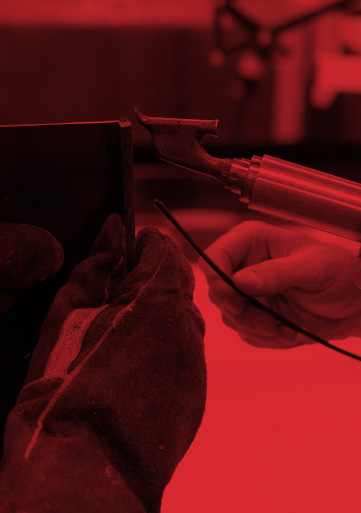
- Complete in-house services – DPI combines thermoforming with plastic welding (hot air, extrusion, butt, and spin), overlap and shiplap bonding, sheet bending up to 10′, and CNC machining — eliminating the need for multiple vendors.
- Scalability – Start with a low-volume thermoformed part and transition to injection molding or another process as volumes grow.
- Reduced material waste – Thermoforming uses only the sheet material needed, keeping scrap and cost low.
Frequently Asked Questions
Thermoforming is a manufacturing process in which a flat plastic sheet is heated until pliable, then shaped over a mold using vacuum, pressure, or mechanical force. Once cooled, the part retains the shape of the mold. DPI uses vacuum forming, heat forming, and sheet bending as part of its thermoforming capabilities.
Vacuum forming uses atmospheric pressure (applied by drawing a vacuum beneath the sheet) to pull the heated plastic against the mold. Pressure forming adds positive air pressure above the sheet for sharper detail and tighter tolerances. DPI’s vacuum forming capability accommodates parts up to 3’×4′.
Thermoforming has significantly lower tooling costs and shorter lead times, making it better suited for low-to-medium volumes and large parts. Injection molding offers higher precision, tighter tolerances, and lower per-part costs at high volumes. DPI offers both processes and can help you determine the right fit for your project.
DPI’s vacuum forming machine accommodates parts up to 3’×4′. Large-format heat forming is available in ovens up to 5’×12′, and sheet bending equipment handles up to 10′ lengths.
DPI works with a wide range of thermoplastic sheet materials including ABS, HDPE, UHMW, polycarbonate, PVC, polypropylene, PETG, and acrylic. Material selection depends on your application’s mechanical, chemical, and temperature requirements.
Yes. DPI has hot air hand welders, extrusion welders, sheet butt welders, spin welding capability, and the ability to perform overlap and shiplap bonding — allowing complex multi-piece assemblies and sealed enclosures to be built from thermoformed components.
Thermoforming tooling is typically a fraction of injection mold tooling — often 5–10× less expensive — because molds can be made from aluminum, wood, or composite materials rather than hardened steel. This makes it a practical choice for low-volume or prototype work.
Lead times vary by part complexity and material availability, but thermoforming’s simpler tooling typically results in faster turnaround than injection molding. Contact DPI for a project-specific timeline and quote.
Yes. DPI’s engineering team can assist with design for manufacturability, material selection, and process recommendations. If your project is best served by combining thermoforming with machining, injection molding, or cast urethane, DPI’s MultiFab Technology brings all of those capabilities together under one roof
One Part or Full Run? Let’s Talk!
From a single replacement part to a short production run, DPI is ready to quote your next thermoformed part. We’ll talk about part dimensions, material preferences, quantity, and any drawings or specifications you have.
Need Support?
When you know what you are looking for or want to start with an idea, we are ready to help. Please reach out and we will start you on your path to plastic solution success!